
Blainville (Nord)
what is capping in real estate: How to Evaluate It Carefully
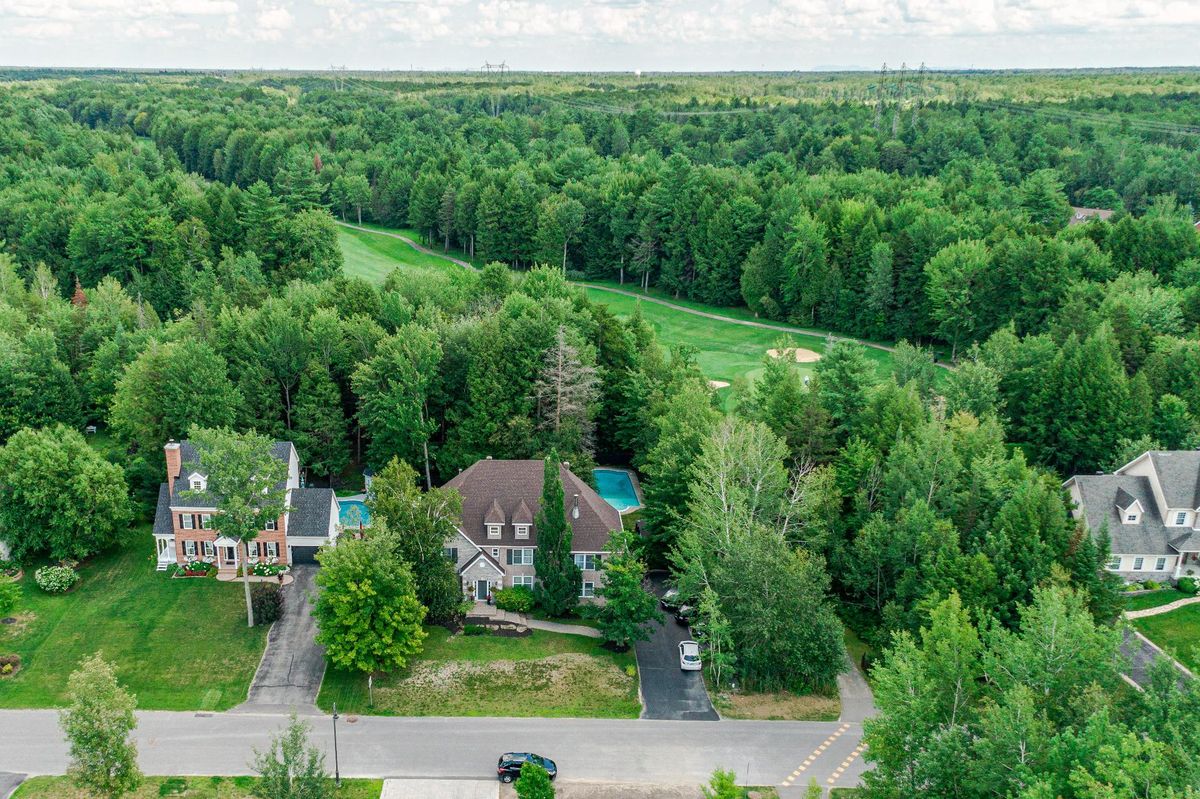
Nestled within the serene Blainvillier sector, alongside the lush greens of the Golf course, stands an exquisite abode deserving of utmost admiration. This distinguished cottage boasts five expansive bedrooms, each meticulously crafted as individual sanctuaries, offering every family member their own private retreat complete with a full bathroom and a spacious walk-in closet. Step outside and be captivated by the sprawling wooded grounds, providing both ample space and privacy, along with parking accommodations for up to seven vehicles and a stunning in-ground saltwater pool.
- Lot area16,146 SF
- Number of rooms27
- Year built1999
5 Bedrooms5 Bathrooms1 Washrooms2 Double width or moreInground PoolWood fireplace
Building details and property interior
- Size
- 60'6" X 40'4" Irregular
- Year built
- 1999
- Foundation
- Poured concrete
- Siding
- Aggregate, Brick
- Roofing
- Asphalt shingles
- Garage
- Attached, Heated, Double width or more
- Bathroom
- Ensuite bathroom, Separate shower
- Basement
- 6 feet and more, Finished basement
Lot and exterior features
- Lot size
- 98'5" X 164' Irregular
- Lot area
- 16,145.87 SF
- Lot
- Fenced, Wooded, Landscaped
- Topography
- Flat
- View
- Panoramic
- Driveway
- Asphalt
- Parking (total)
- Driveway : 8, Garage : 2
- Pool
- Heated, Inground
- Proximity
- Highway, CEGEP, Daycare centre, Golf, Hospital, Park, Bicycle path, Elementary school, Alpine skiing, High school, Cross-country skiing, CARAC.PROX.SMOT, CARAC.PROX.SVTT, Commuter train, Public transportation, University
Characteristics
- Heating System
- Forced air
- Heating Energy
- Dual energy, Electricity, Heating oil
- Fireplace-Stove
- Wood fireplace, Wood stove
- Equipment/Services
- Central vacuum cleaner system installation, CARAC.EQUI.BALC, CARAC.EQUI.COUR, Central heat pump
- Water Supply
- Municipality
- Sewage System
- Disposal field, Septic tank
Included & Excluded
- Included
- Cooktop, built-in oven, dishwasher, all blinds, pool heat pump (2020), central vacuum, small generator.
- Excluded
- Curtains, all appliances, pendant light in basement, TV stands, all owners personal effects.
what is capping in real estate can refer to reaching a brokerage commission cap, after which an agent's split may change for a defined period; the contract and brokerage policy determine the actual effect.
Use the capping / real / estate review as a decision brief: understand the property decision without treating a general article as legal, tax, lending, or investment advice. Review commission split, cap period, included fees, reset rules, and written policy before accepting a recommendation.
A careful explanation of what is capping in real estate applies a capping / real / estate review rule: In property decisions, the signed document and applicable law matter more than an informal label. Then mark the facts that may change with jurisdiction, timing, provider, or personal circumstances.
Capping usually concerns a brokerage commission threshold
Write the core proposition in one sentence, then test every word against the capping / real / estate review context. Terms that affect rights, health, money, access, or professional duties need tighter boundaries than casual descriptive language. A clear limit makes the answer more trustworthy, not less complete.
Within the capping / real / estate review, the focus is commission split, cap period, included fees, reset rules, and written policy. In property decisions, the signed document and applicable law matter more than an informal label. That combination gives the editor a clear standard for deciding which material belongs and which tempting digressions should be cut.
A commission-cap example without invented rates
The fastest capping / real / estate review clarity check for what is capping in real estate is an example with visible assumptions. The examples here are original teaching devices, not claims about actual clients, properties, patients, or employers.
- Illustrative scenario: a buyer compares two similarly priced properties. One has lower monthly costs, while the other has restrictions that limit rental use. Price alone does not settle the decision.
- Document example: a listing summary is a discovery source; the deed, disclosures, inspection, association records, and lender terms are decision evidence.
After reading the example, change one assumption and observe whether the answer changes. In a capping / real / estate review review, useful variables may include audience, location, timing, source quality, contract language, physical comfort, or service scope. That simple counterfactual reveals which conditions the final article must state explicitly.
A due-diligence sequence for the transaction
A workable capping / real / estate review process for what is capping in real estate should reduce uncertainty in order. Complete these steps before adding detail that does not change the reader's decision.
1. Define the property, location, parties, and decision date.
The output is a one-sentence scope that prevents drift. For the capping / real / estate review question, keep the result short enough that another person can audit it without reconstructing the whole search.
2. Collect current documents rather than relying on listing language.
Keep the raw observation or document separate from your interpretation. For the capping / real / estate review question, keep the result short enough that another person can audit it without reconstructing the whole search.
3. Separate purchase price from financing, operating costs, reserves, and transaction costs.
Record unknowns openly so an editor does not mistake them for facts. For the capping / real / estate review question, keep the result short enough that another person can audit it without reconstructing the whole search.
4. Mark every assumption controlled by local law or a negotiated clause.
Choose a next move proportionate to cost, risk, and reversibility. For the capping / real / estate review question, keep the result short enough that another person can audit it without reconstructing the whole search.
5. Stress-test one unfavorable but plausible change.
Use the closest authoritative source available for consequential claims. For the capping / real / estate review question, keep the result short enough that another person can audit it without reconstructing the whole search.
6. Ask qualified local professionals to review material rights and obligations.
Set a review point and note what evidence could change the decision. For the capping / real / estate review question, keep the result short enough that another person can audit it without reconstructing the whole search.
Documents and numbers to compare
When assessing what is capping in real estate, normalize scope within the capping / real / estate review before ranking alternatives. Identify which differences affect the outcome, which are preferences, and which remain unverified.
| Review area | Decision question | Evidence or output |
|---|---|---|
| Title | Who owns what, and how is it recorded? | Deed and recorded records |
| Contract | Which deadlines, conditions, and remedies apply? | Signed agreement and addenda |
| Condition | Which defects or maintenance obligations are known? | Inspection and disclosure records |
| Money | Which costs recur or can reset? | Lender terms, bills, and budgets |
| Exit | What could restrict sale, lease, or transfer? | Local rules and governing documents |
Score only after writing the evidence beside each field. For the capping / real / estate review decision, a blank cell should remain ‘unknown’ until resolved; assigning it an average value hides the very uncertainty the comparison is meant to surface.
Mistakes that weaken the answer
Accuracy problems in what is capping in real estate often begin when the capping / real / estate review stretches a useful general principle into a universal claim. Remove or repair the following patterns:
- Avoid: Assuming a term has the same legal effect everywhere.
- Avoid: Using projected returns without defining every input.
- Avoid: Treating a directory or listing profile as proof of current status.
- Avoid: Ignoring an exit restriction because it does not affect the initial purchase.
Precision also applies to omissions. A capping / real / estate review explanation that gives benefits without costs, a method without limits, or a definition without jurisdiction creates a misleading impression even when every individual sentence sounds plausible.
Questions readers commonly ask
Can a general definition settle a transaction?
No. Use it to identify the documents and questions that require local, transaction-specific review. In the capping / real / estate review, keep that answer tied to the stated scope and evidence.
Which source should carry the most weight?
For rights and obligations, start with executed documents, official records, and current guidance from the relevant authority. In the capping / real / estate review, keep that answer tied to the stated scope and evidence.
What must be checked before publication?
For the capping / real / estate review, Verify current law, licensing, ownership records, fees, tax treatment, financing terms, and named entities with applicable official or first-party sources. Add direct links and review dates in the editorial system, and remove any assertion that the available evidence does not support.
Editorial and safety boundary
The capping / real / estate review material should be reviewed at the level of its consequences. Routine writing or planning advice needs editorial evidence checks; health, property, employment, privacy, and security claims require the applicable qualified or official review.
For the capping / real / estate review decision, confirm executed documents, current public records, and local requirements with appropriately licensed professionals. General examples do not determine ownership rights, taxes, financing, contract remedies, or investment suitability.
Bottom line
Good guidance on what is capping in real estate combines a plain answer with honest capping / real / estate review boundaries. Confirm variable facts, choose a reversible next move when possible, and document why the evidence supports it.
Recommended Resources: